HVAC marketing agency for contractors
More booked installs.
Fewer junk leads.
An HVAC marketing agency for Local Service Ads, Google Ads and SEO. One contractor per market.
Demand through the year
How we engage
- One contractor per service area
- You own every ad account and the data in it
- 90-day initial term, month to month after that
- Reporting on booked jobs, not impressions
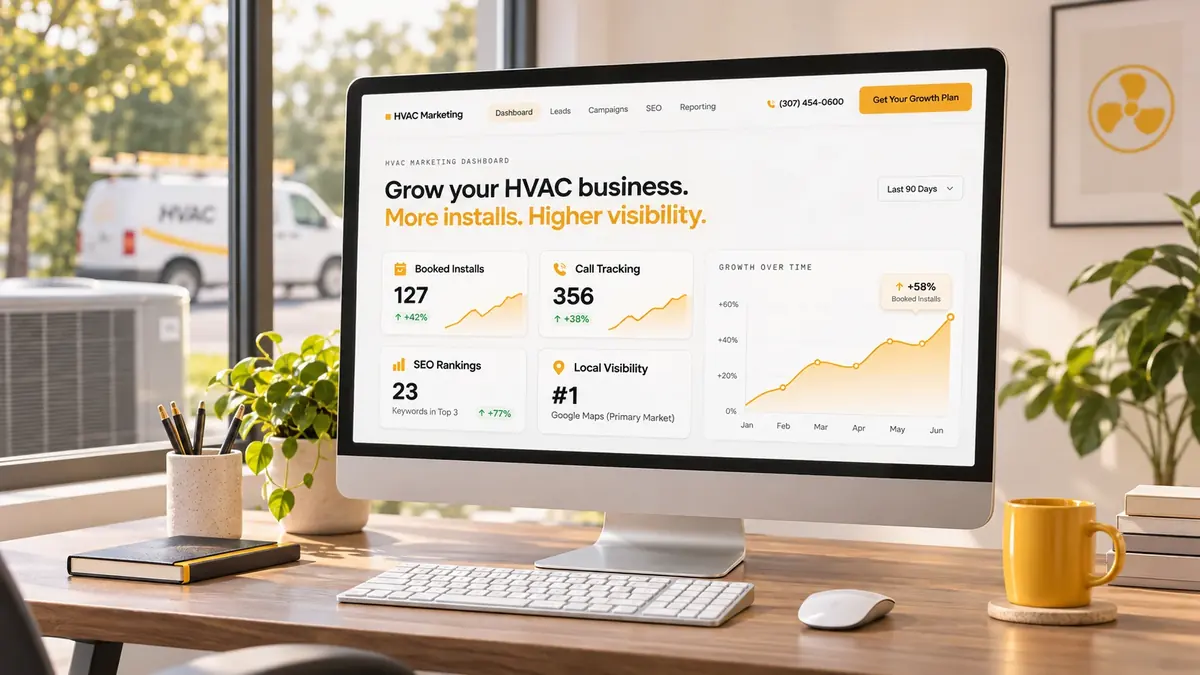
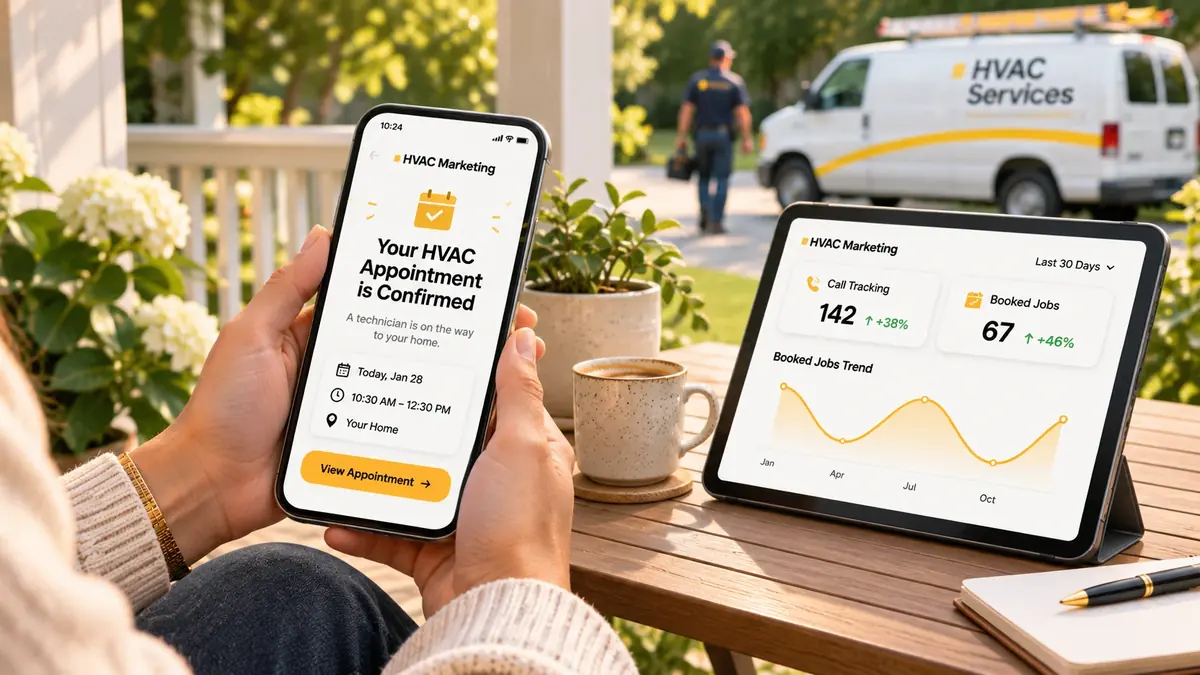
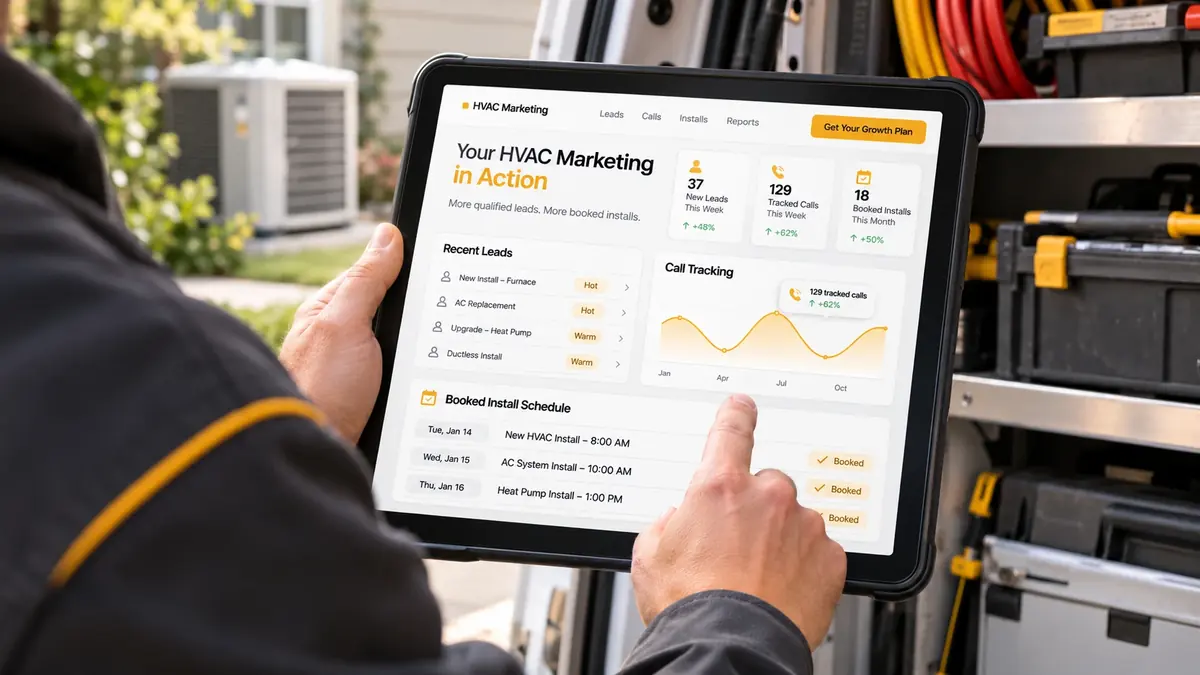
Illustrative mockups with sample numbers, not client results.
We work alongside
ServiceTitan, Housecall Pro, FieldEdge, Jobber and Service Fusion, plus whatever call tracking you already run.
What we run
Five channels, one operating system
Most contractors do not need all five on day one. We start where the money is currently leaking.
Lead Generation
We build the whole path from first click to a job on the schedule, then report on jobs.
SEO
Map pack placement and service-area pages that bring in replacement work, not just traffic.
Google Ads
Campaigns built to win replacement work, with the cheap repair traffic filtered out.
Local Service Ads
The top slot on the page, paid per lead, with disputes filed and reviews kept moving.
Web Design
Fast, plain and built to convert. The site is a sales tool, not a brochure.
We only work with HVAC contractors.
That is not positioning. It changes what the work looks like. We know a heat pump conversion is worth twenty tune-ups, that January and July carry the year, and that a lead arriving at 9pm on a Sunday in a cold snap is worth more than one arriving at 2pm on a Tuesday in May.
An agency that also runs dentists and roofers cannot build around any of that. They will send you leads, count them, and let you work out why half of them wanted a filter change. We would rather be narrow and useful.
Built for how HVAC businesses actually run
The right plan depends on how many crews you run and which jobs pay. These are the three situations we see most.
Owner-operators and small crews
When every truck matters, a thin week of leads is a thin month. We focus on the channels that fill a small schedule quickly, and on tracking so you know what the phone is actually producing.
Growing multi-crew companies
More crews mean more capacity to fill and more waste when the wrong calls come in. We pace spend around crew availability and the jobs you most want to book.
Replacement-focused companies
Replacements and installs carry the margin, but repair searches carry the volume. We build campaigns around the work you want, not every service call that exists.
Not sure which one is you? Describe your crews and your market in the form and we will say where we would start.
How the work actually runs
Audit
We go through your ad accounts, Google Business Profile, site speed and call handling before proposing anything. Most of the early wins are already sitting in there.
Build
Tracking first, then campaigns and pages. Nothing goes live until calls and forms are attributed properly, because unmeasured spend is guesswork.
Run
Weekly optimisation against search terms and call recordings. Budgets move ahead of the season rather than reacting to it.
Report
A monthly review of calls, booked jobs and cost per job. If a channel is not paying, we say so and move the money.
How a lead becomes revenue
From a search to a booked job
Most reports stop at step three. Ours follows the chain to the end, so the numbers you read are jobs, not clicks.
A homeowner searches
Usually in a hurry: no cooling, no heat, or a quote request.
They find you
In the map results, a Local Service Ad, a Google ad or your website.
They call or book
Through a tracked number or form, so the source is recorded.
The lead is checked
Was it a real job, or a wrong number, a job-seeker or a call outside your area?
The job is booked
The booking is logged against the source that produced it.
If a link in that chain is missing, for example calls that go unanswered, we say so in the report instead of hiding it.
The honest comparison
We are not always the right answer
Hiring in-house
- Salary before any media spend
- One person covering paid, SEO and web
- Full control day to day
- Learns your business deeply
A generalist agency
- Learning HVAC on your budget
- Twelve-month contracts are standard
- Will happily take your competitor too
- Broad channel experience
Working with us
- HVAC is the only industry we work in
- One contractor per service area
- 90 days, then month to month
- You own the accounts and the data
Marketing that follows the weather
HVAC demand is not flat, so a flat plan wastes money. This is how the focus shifts through the year.
Get ahead of the cooling season
Promote cooling tune-ups and replacement estimates before the first heat wave, and make sure your website and Google Business Profile are current. The usual advice is to have cooling checked in spring.
Protect capacity at peak demand
Repair demand spikes. We pace spend to what your crews can actually run, and lean toward the jobs worth the most, so you are not buying calls you cannot take.
Heating tune-ups and furnace replacements
Shift budget and pages toward heating before the first cold snap. Fall is also when many homeowners plan replacements rather than wait for a failure.
Emergency heat and after-hours calls
A heating failure at night is urgent. Call handling, opening hours and response matter more than any ad copy. We check these first.
Recurring service plans smooth the quiet months. Read our guide to HVAC maintenance agreements.
What we measure, and what we do not lead with
Every number in a report comes from your own ad accounts, call tracking and booking records. None of it is an industry average.
We report
- Booked jobs, by the source that produced them
- Cost per booked job
- Calls answered and calls missed
- The share of leads that became jobs
- Revenue from booked jobs, where you share it with us
We do not lead with
- Impressions and clicks on their own
- Lead counts with no job outcome attached
- Rankings for terms nobody searches
- Averages borrowed from other companies
They can be useful context. They are not the result.
From the blog
All guides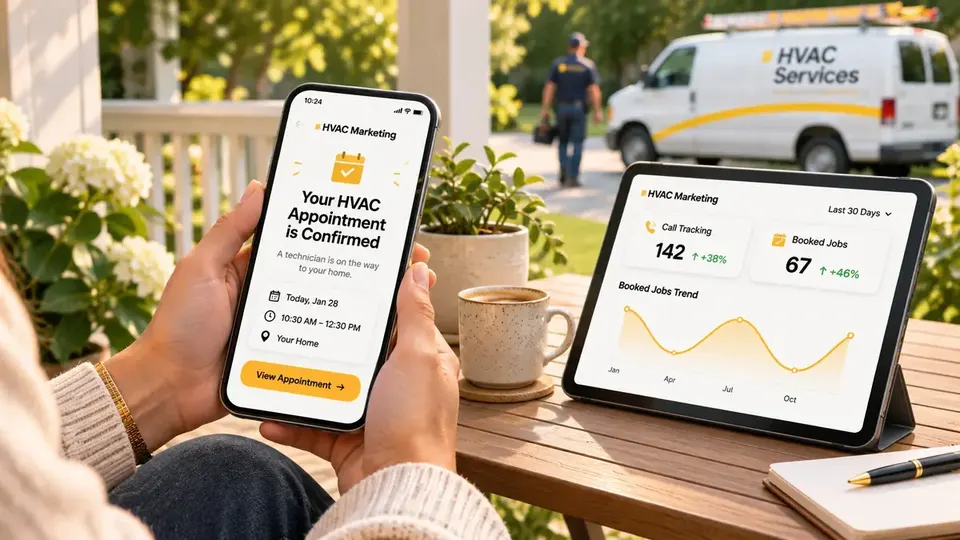


Questions we get asked
What size HVAC company do you work with?
Typically contractors between $1M and $20M in annual revenue with at least one dedicated install crew. Below that the media spend needed to gather useful data is usually hard to justify, and we will say so rather than take the work.
How much should an HVAC company spend on marketing?
There is no HVAC-specific number that holds up. The SBA's marketing budget guide cites an average of 7.9 percent of revenue across business types in 2018, and tells owners to check their trade association for benchmarks. The better test is capacity: spend what your install crews can turn into jobs, because leads you cannot service become bad reviews. We size the budget against your market and crew count on the first call.
Do you require a long contract?
A 90-day initial term, because nothing meaningful can be judged in less than a season, then month to month. No annual lock-in and no cancellation fee.
Who owns the ad accounts and the website?
You do, in every case. We work inside your Google Ads, Local Services and analytics accounts. If we part ways you keep the accounts, the history, the site and the phone numbers.
Do you work with my competitor?
No. One contractor per service area. We are not going to bid your budget against another client in the same auction and call it a service.
What do you actually report on?
Calls, booked appointments and jobs, tied back to the campaign and search term that produced them. Impressions and click-through rate are diagnostic numbers, not results, and we do not lead a report with them.
Find out what your market is worth
Tell us your service area and what is stuck. We will come back with a plan, or tell you we are not the right fit.